

Written by Mayuri Ramnarain MBChB IV
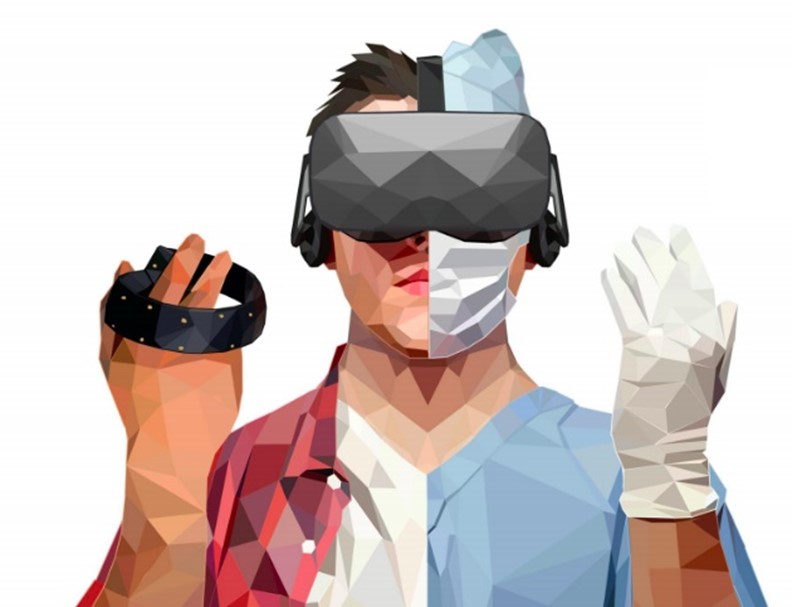
Figure 1 (1)
Surgery is a visual and tactile field. Medical students and registrars are taught the discipline by practicing on cadavers, while receiving expert instruction. This method of teaching is age old and irreplaceable, however innovative digital approaches may enhance training. Digital modalities include virtual reality (VR) and augmented reality (AR). VR provides full sensory immersion in the program and intends to completely block out the real world. Alternatively, AR combines digital simulations with real world stimuli to generate a mixed reality. AR delivers a superior user experience to VR because of its ability to offer tactile feedback. (2)
In a 2020 systematic review on AR in surgical training, Williams and colleagues found that AR improved student competency and postoperative complication rates. However, operative time increased. This could be because students took longer to familiarise themselves with AR equipment. (2)
Other applications of AR include head-mounted displays (HMD), which are like VR headsets. Without hindering a surgeon’s view, HMD could display vital signs, the next steps in a procedure, or medical images. This could provide surgeons easy access to additional patient information and enables them to focus on the procedure without looking away. AR images can also be projected to overlay the patient. By projecting major vessels or nerves, safety and precision could be increased, and operative time reduced. This type of application is already being developed, and in 2018 the Federal and Drug Administration (FDA) authorised the OpenSight Augmented Reality System. (3)
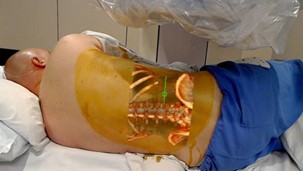
Figure 2: The OpenSight Augmented Reality System (4)
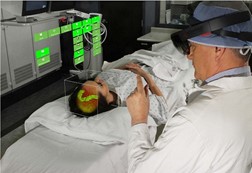
Figure 3: The OpenSight Augmented Reality System (4)
Despite the promise that AR holds for the future of surgery, it faces major hurdles. These include having the technical ability to reconstruct overlaid images, often with the assistance of advanced technologies and algorithms. Hospitals and doctors are simply not equipped to construct such programs. Furthermore, even if the AR does not impede a surgeon’s field of vision, it is conceivable that too much additional information could distract them during a procedure. Further issues lie in a hospital’s financial ability to afford the AR equipment and programs, and whether qualified surgeons are willing to learn how to utilise this new and ground-breaking technology in practice and to train future surgeons. (3)
Student Experience
In October 2020, a few University of Pretoria medical students were given access to the skills lab to try out VR technology. They practiced intubation on the VR simulator and then compared it to working on an advanced life support dummy. Their experience demonstrated the above-mentioned downfall of VR: an absence of tactile feedback. Moreover, the program sporadically glitched, resulting in equipment being dropped and causing the room to spin uncontrollably. In addition, there were some instances where the programme lacked anatomical detail and the VR procedure did not follow all steps included in an OSCE checklist.
While there were downfalls in the VR system that the students trialled, it does have significant utility in medical and surgical training. The system allowed students to become familiar with the procedure prior to practice on the dummy. This made time spent with the dummy more valuable, as it was used to develop the physical skill, rather than orientating oneself and learning the procedure. The VR experience also allowed students to familiarise themselves with various surgical instruments and the layout of the room or theatre in which the procedure is performed. This experience can be invaluable, especially in the environment of the Covid-19 pandemic, where training in specific units may be restricted.
Special thanks to Ms. Kabelo Kgarosi: Faculty Library Manager in Health Sciences, Dr. Cheryl Tosh Scientific Editor in the Faculty of Health Sciences and Mr. Bryce Svensson: Vice-chairperson of TSSS.
Use the following University of Pretoria library link to read the full article:
https://UnivofPretoria.on.worldcat.org/oclc/8561476772
Use the following link to watch the student experience video:
https://youtu.be/fHQFlt5-kRM
Bibliography
- 2020. Man Simulating Surgery Using AR. [image] Available at: <https://medcitynews.com/2018/05/can-vr-training-churn-our-better-surgeons/> [Accessed 14 December 2020].
- Williams MA, McVeigh J, Handa AI, Lee R. Augmented reality in surgical training: a systematic review. Postgraduate Medical Journal [Internet]. 2020; 96(1139): [537-42 pp.].
- Jacobsen B. Futures Platform 2019. [cited 14 December 2020]. Available from: https://www.futuresplatform.com/blog/how-augmented-reality-can-change-surgical-procedures.
- Novarad. OpenSight Augmented Reality System. Novarad; 2018.
